A smart, simple finish
A uniform dark surface gives the driveway a tidy appearance without competing with the character of your home.
A smart, practical entrance starts with good groundwork. Discover tarmac finishes, edging, drainage, installation and maintenance to help you plan a driveway that suits your home.
Tarmac is a familiar name for bituminous driveway surfacing. Modern domestic driveways are commonly finished using an asphalt-based material laid and compacted over a properly prepared foundation.
It creates a continuous-looking, dark surface that can suit traditional and contemporary properties. The quality of the base, levels, drainage and edges is just as important as the visible finish.
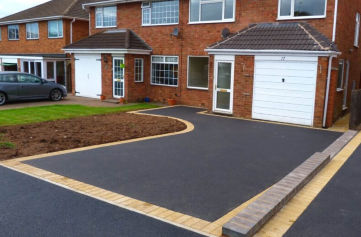
Tarmac can be a straightforward choice when you want a neat surface and a practical driveway layout.
A uniform dark surface gives the driveway a tidy appearance without competing with the character of your home.
A suitable specification can accommodate regular vehicle movements and domestic parking requirements.
Curves, turning areas and longer access drives can be considered as part of a carefully planned design.
Kerbs, blocks or other suitable restraints can create crisp lines and protect the perimeter.
A good result balances appearance with the practical needs of the driveway.
The sub-base and ground conditions should be assessed before surfacing. Weak areas and poor preparation can affect the finished driveway.
Tarmac is generally not a permeable finish. Falls, channels and lawful drainage arrangements may be required.
The build-up should reflect anticipated vehicle loads, existing ground and site conditions. Confirm the specification in writing.
Restraints, manholes, steps and adjoining surfaces should be integrated into the design from the outset.
Each property is different, but a clear specification helps you understand the work before it begins.
Discuss dimensions, access, parking requirements, drainage and the condition of the existing surface.
Confirm excavation, disposal, sub-base, levels, edging, drainage and surfacing specification.
The contractor prepares the surface, lays and compacts the material, then advises when the driveway can be used.
Area, excavation, base construction, access, drainage, edging and removal of existing material all affect the quotation.
Traffic restrictions depend on the material, weather and installation method. Follow the installer’s site-specific advice before parking.
Sweep debris, clear drainage channels and deal with oil or fuel spills promptly using suitable cleaning guidance.
Hot weather, concentrated loads and turning vehicle wheels can affect some surfaces. Ask how marks, settlement and repairs would be handled.
Useful answers before you plan your driveway.
It can suit many domestic properties. Suitability depends on the ground, gradient, access, expected vehicle loads and drainage. A site assessment is important.
The words are often used interchangeably in everyday conversation, but products and specifications differ. Ask which surfacing mix will actually be installed.
There is no reliable single price without checking the site. Area, excavation, base preparation, edging, drainage and access all influence the final cost.
Sometimes an existing surface can form part of a suitable construction, but cracking, movement, drainage, levels and structural condition must be assessed first.
Yes. A tarmac finish is generally impermeable, so the design needs to account for where rainwater flows and any applicable planning or drainage requirements.
Timescales vary with driveway size, excavation, weather, access and the scope of groundwork. Request a project-specific programme.
Follow the installer’s advice, which depends on the material and conditions. Avoid assuming that a newly laid surface is ready for immediate vehicle use.
Yes. Suitable kerbs, block-paved borders and other restraints can add definition, provided they are integrated into the overall construction.
Regular sweeping, keeping drainage clear and dealing promptly with spills can help. Ask your installer about cleaning methods and any material-specific care instructions.
Abbey Driveways is based in the Llanelli area and welcomes enquiries across South and West Wales. Contact the team to confirm coverage and availability for your project.
Areas listed are enquiry locations, not separate offices or guaranteed service commitments. Coverage should be confirmed directly.
Tell us about your space and the finish you have in mind.